Personal Project · AI Imagery · Character LoRA · Digital Twin
The Time Traveller.
One man, fourteen eras, one denim shirt.
Ken travels through time – from a pirate ship off Cape Horn to the Wild West, from the Jurassic to the summit of Everest – always in the same denim shirt, always with his iPhone in hand.
- Project
- Personal project
Digital Twin - AI Imaging
- Robert Brembeck
- Model
- Ken
Procast, Hamburg - Technology
- Character LoRA
Qwen-Image 2.1
The project
There are many ways to bring a real person into AI images today. Training a LoRA used to be one of the few reliable ones – and it has gone a little out of fashion, mainly because training one takes real effort.
Done well, it delivers a realism and consistency that a handful of reference images cannot match: the model gets to know a person far more thoroughly. In our view, it comes close to beating a hybrid production with a real shoot.
Whichever route you take, in the end it is the post team that brings it home.
The idea
Hamburg model agency Procast provided a dataset of their model Ken. With it, we trained our own LoRA and sent Ken on a journey through fourteen eras – reacting to each world, shooting it on his phone, and always staying himself.
The images.
Insights
How we did it.
LoRAs have their downsides: the model often learns parts of the training backgrounds too, and a LoRA that is too strong limits the creative range of the base model. Finding the right training parameters and weighting is a fine balance.
01
The shoot
240 portraits of Ken: one person, one outfit, five lighting setups – studio, brick wall in hard sun, street in daylight.
02
Curation
73 images chosen to cover every angle, every light and every framing from close-up to full figure – near-duplicates out, so no pose gets over-weighted.
03
Captions
Each image gets a caption with a trigger word. Whatever may change – clothing, background, light, pose – is described. What makes Ken Ken is deliberately left out.
04
Training
A character LoRA on Qwen-Image 2.1, trained locally with AI Toolkit and tested checkpoint by checkpoint. Step 2000 at a strength of 0.9 proved the best balance; FLUX.3 was tested in parallel.
05
Time travel
Short prompts, film look first. Each era rendered with ten seeds – over 400 renderings across 23 scenes, from which the final series was curated.
06
Identity bleed
Extras began to take on Ken's face. Every face in every image was measured automatically; look-alikes were repainted without the LoRA, aware of gender and expression.
07
Finish
A SeedVR2 upscale on the ungraded images, then one consistent analog grade: S-curve, lifted blacks, split tone, vignette and grain scaled to the image size.
The Time Traveller. Fourteen eras.
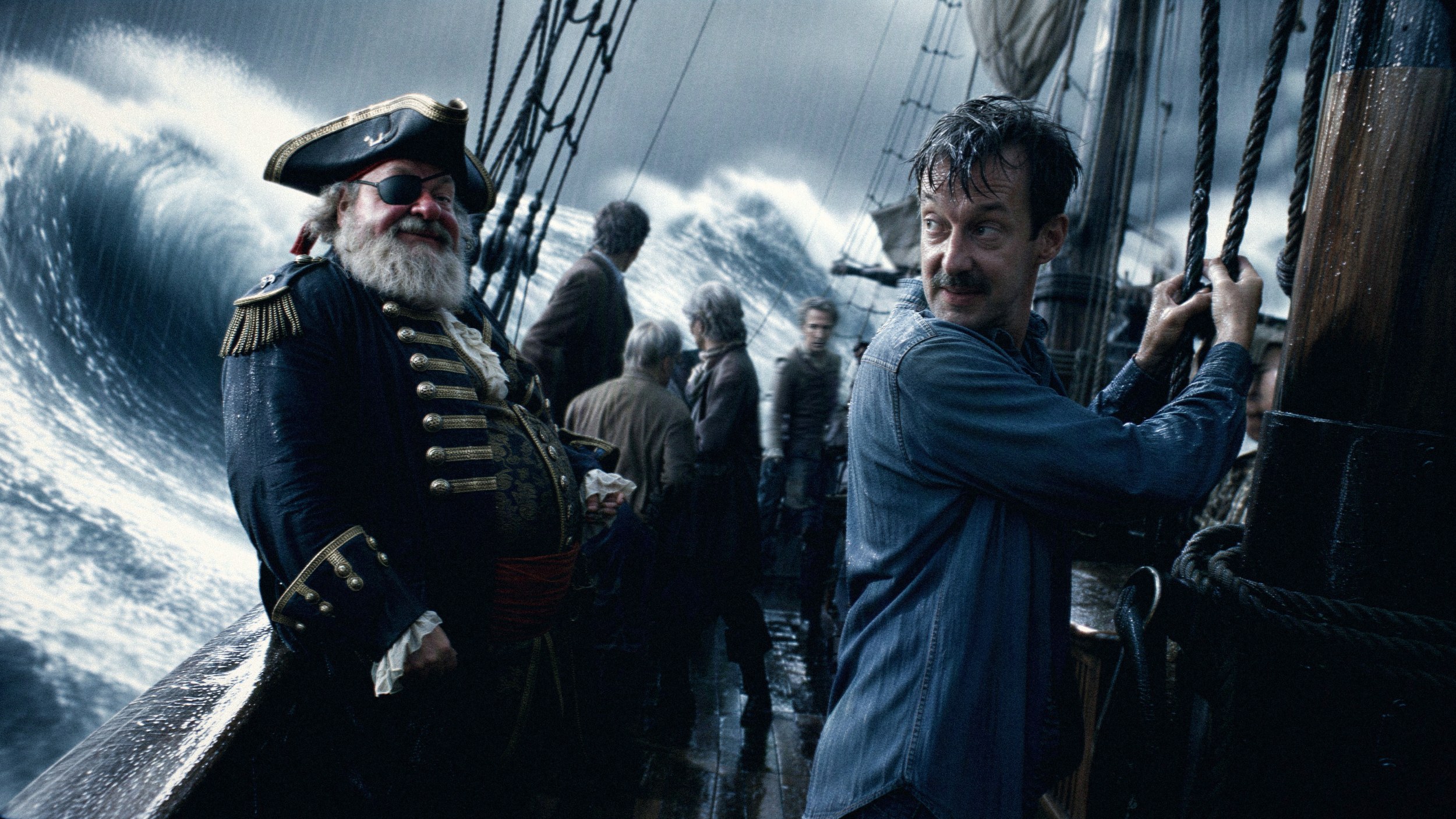
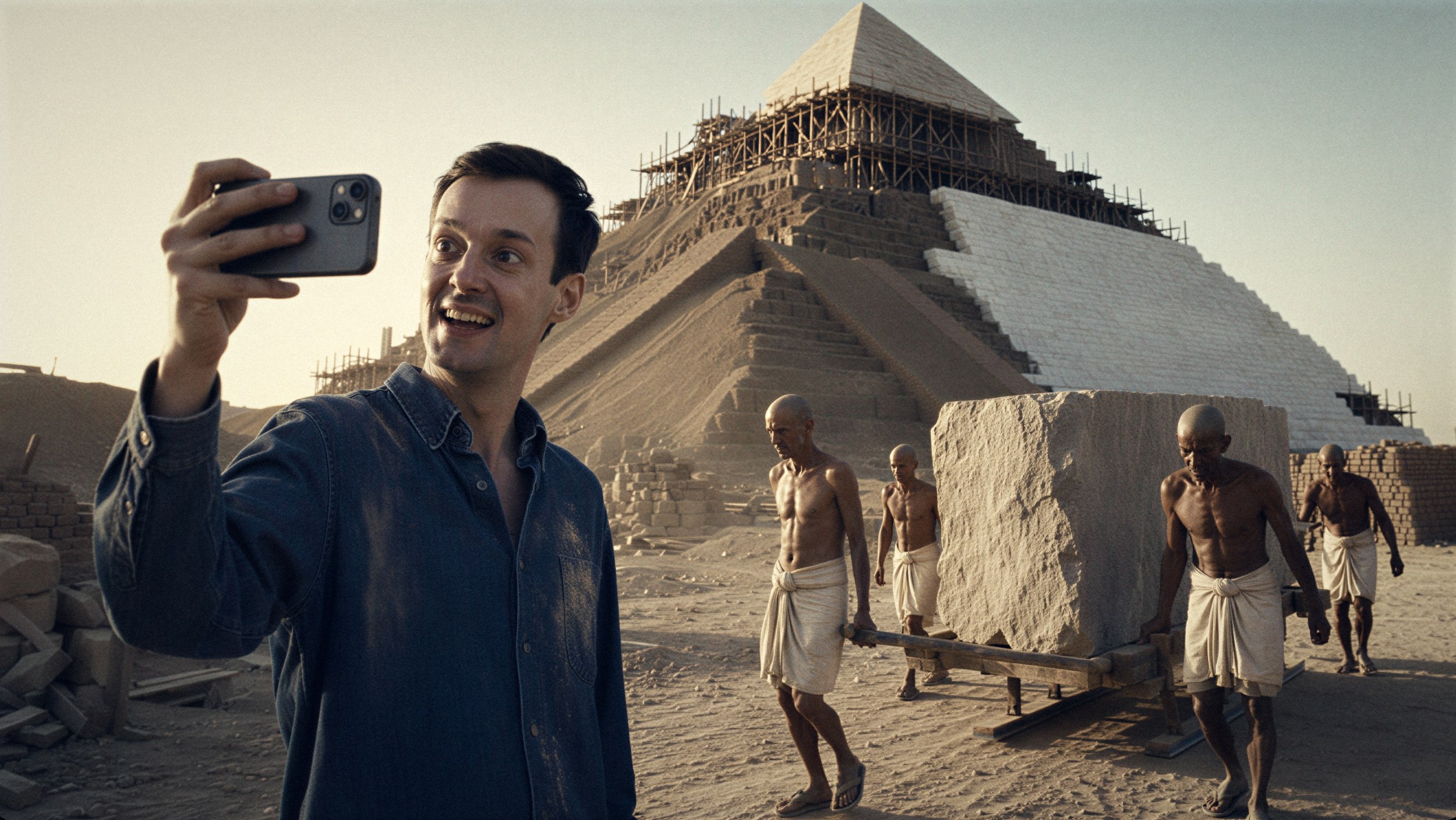
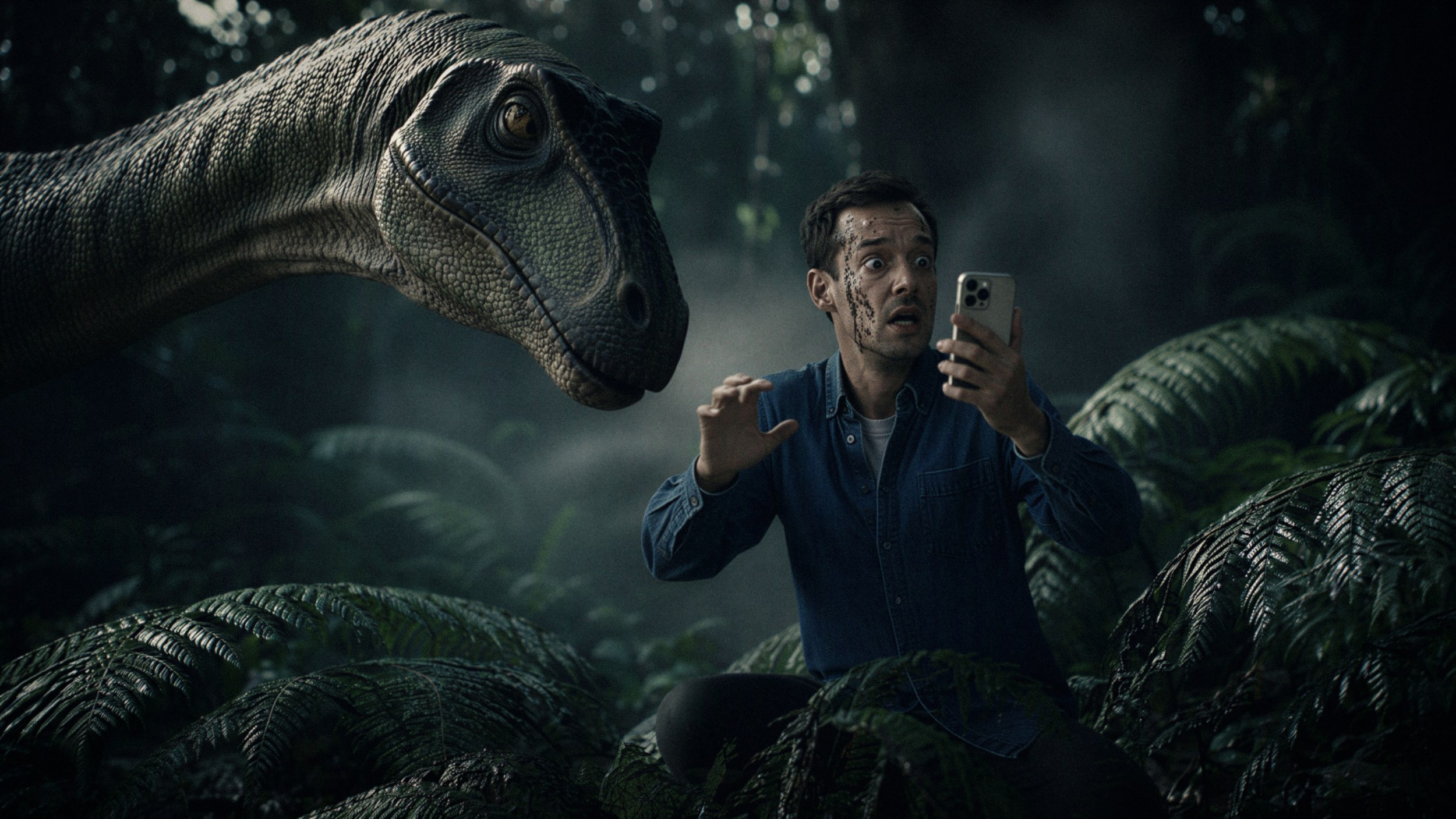
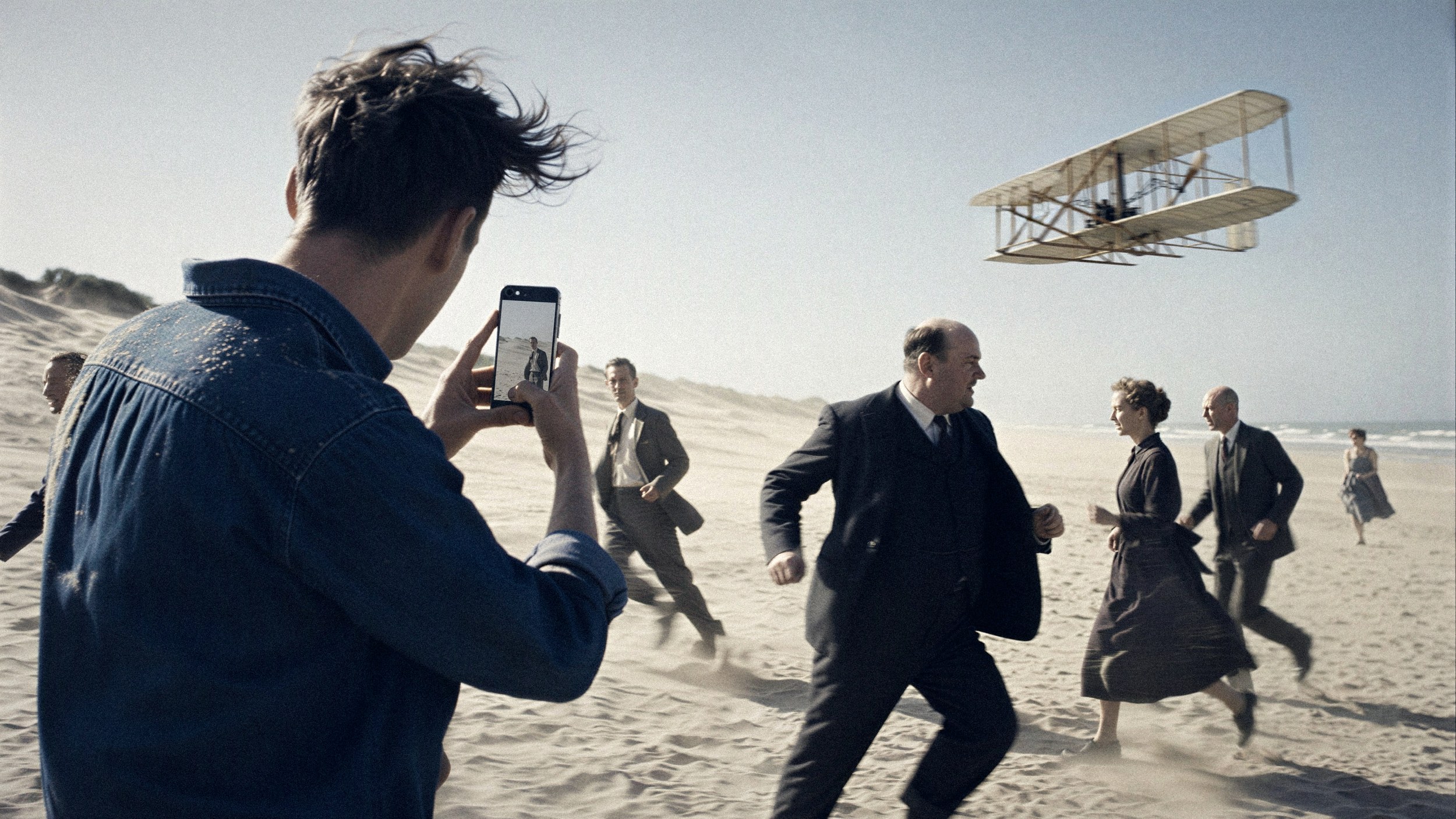
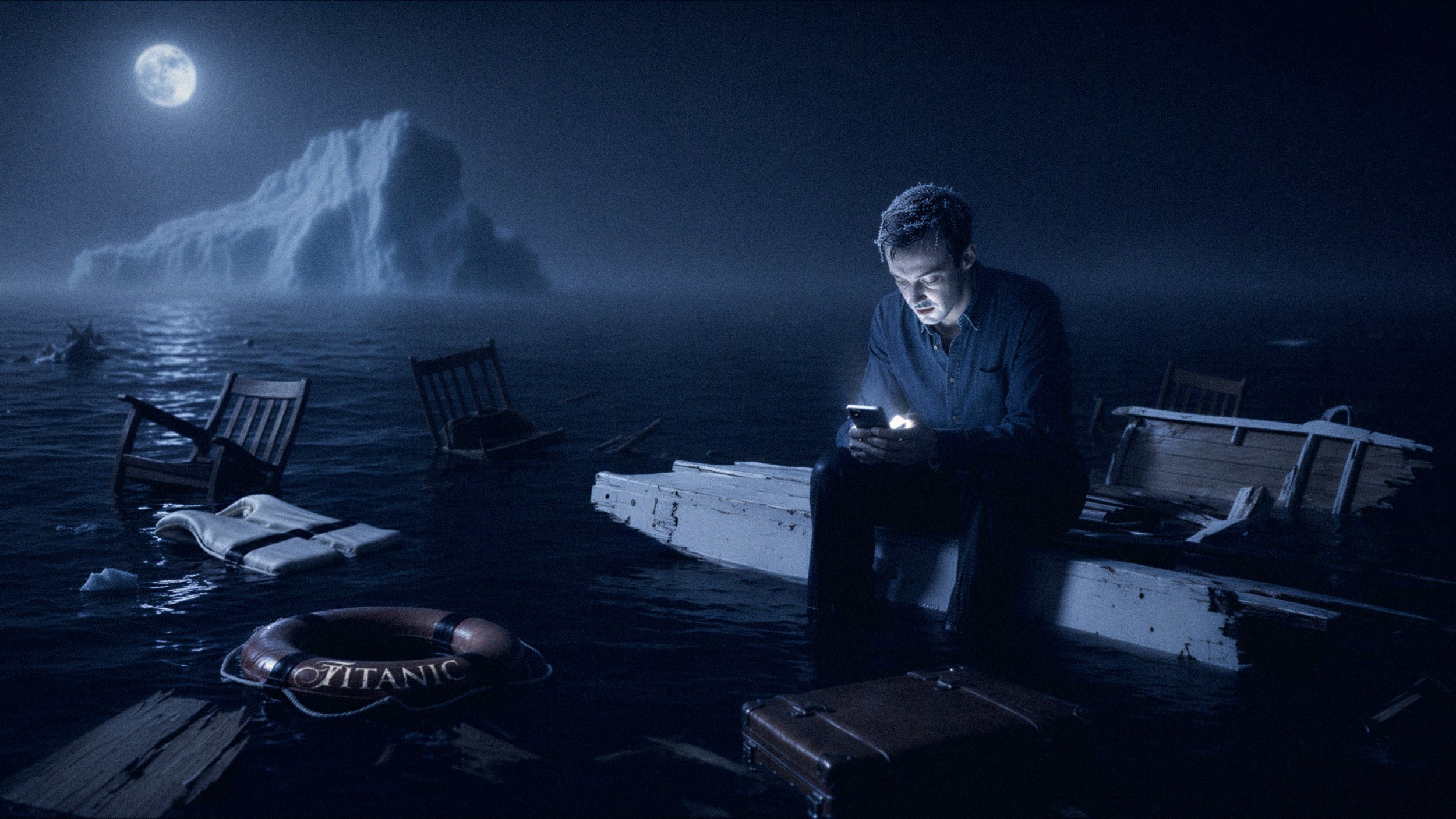
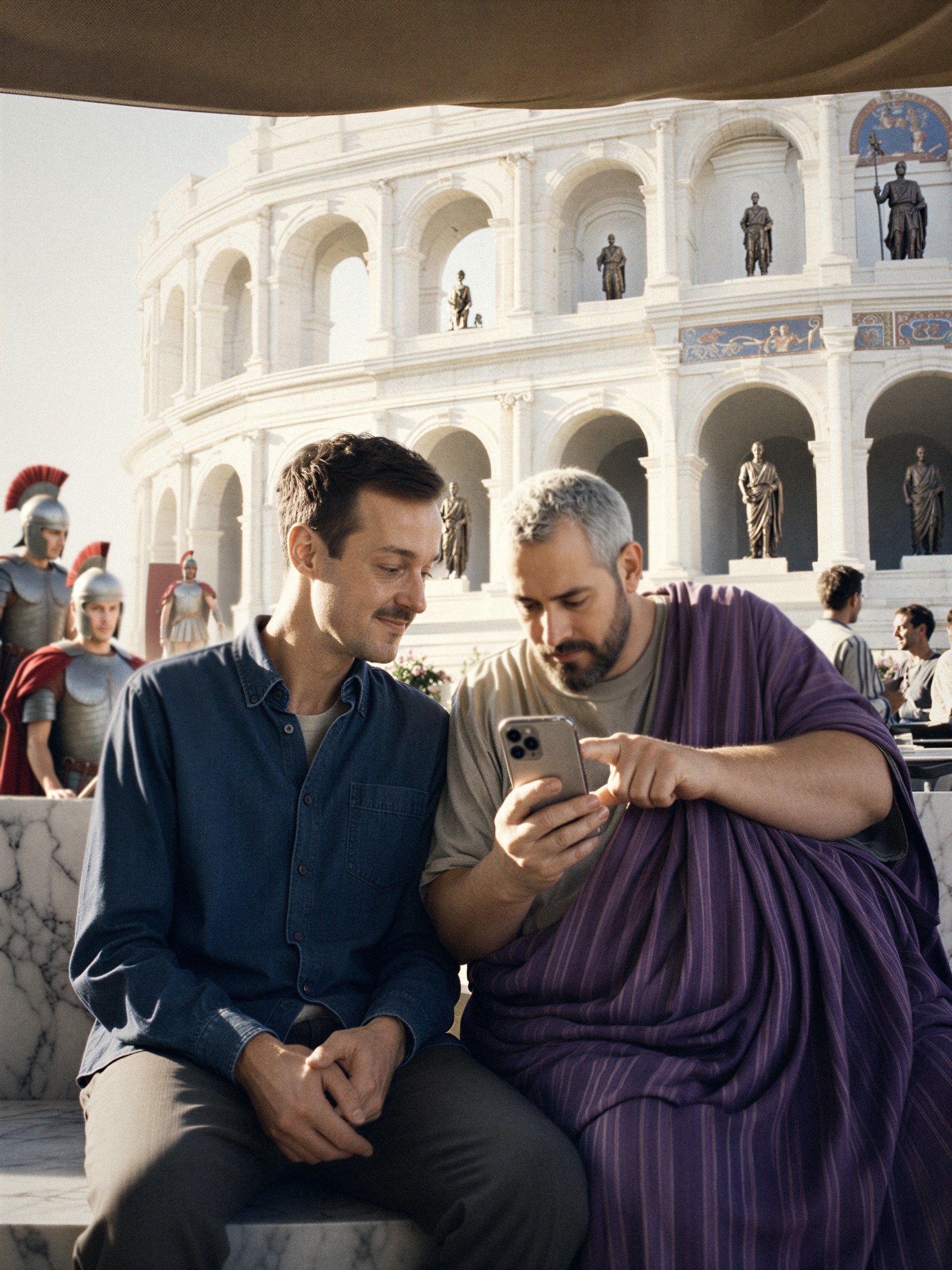
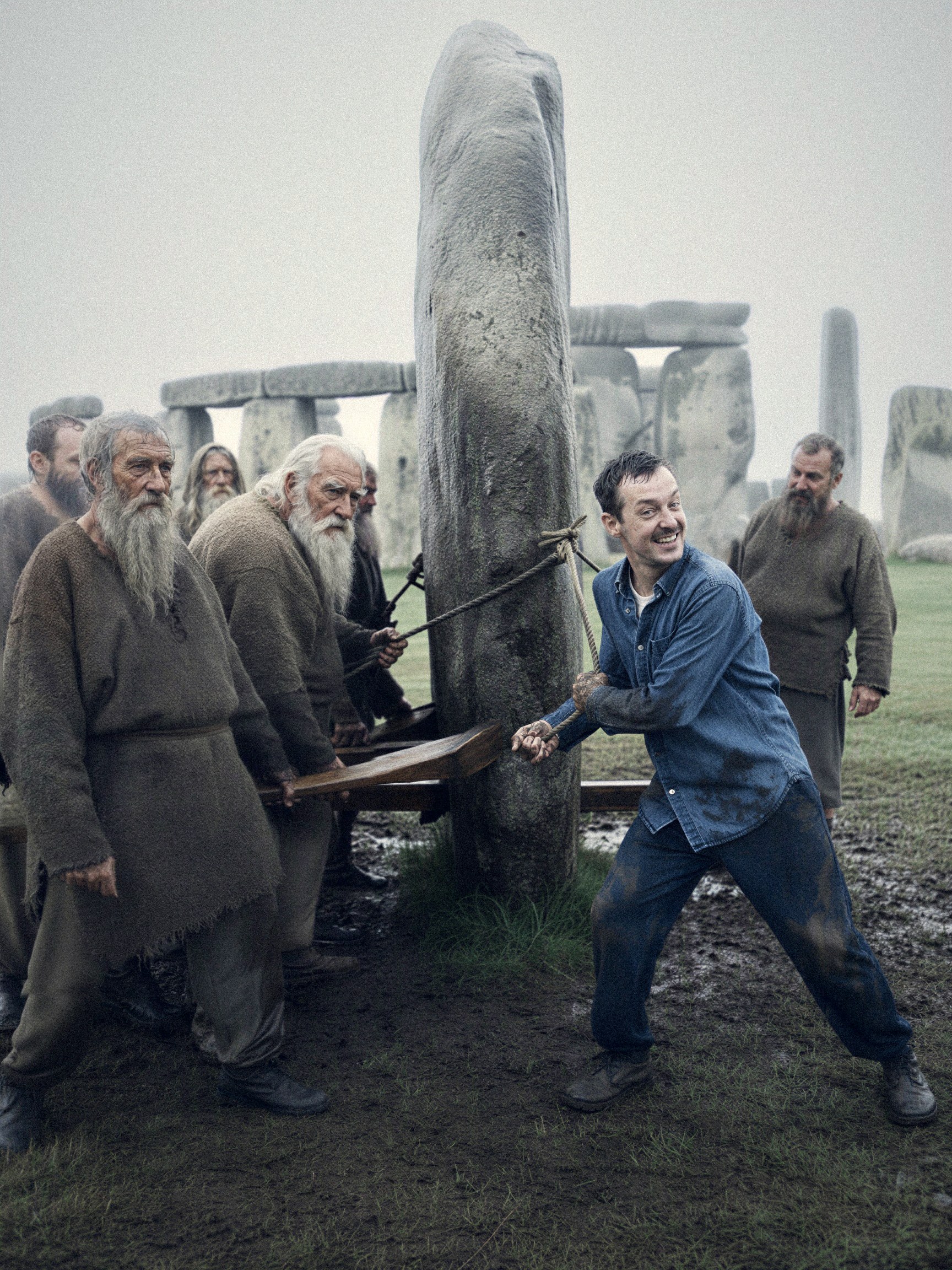
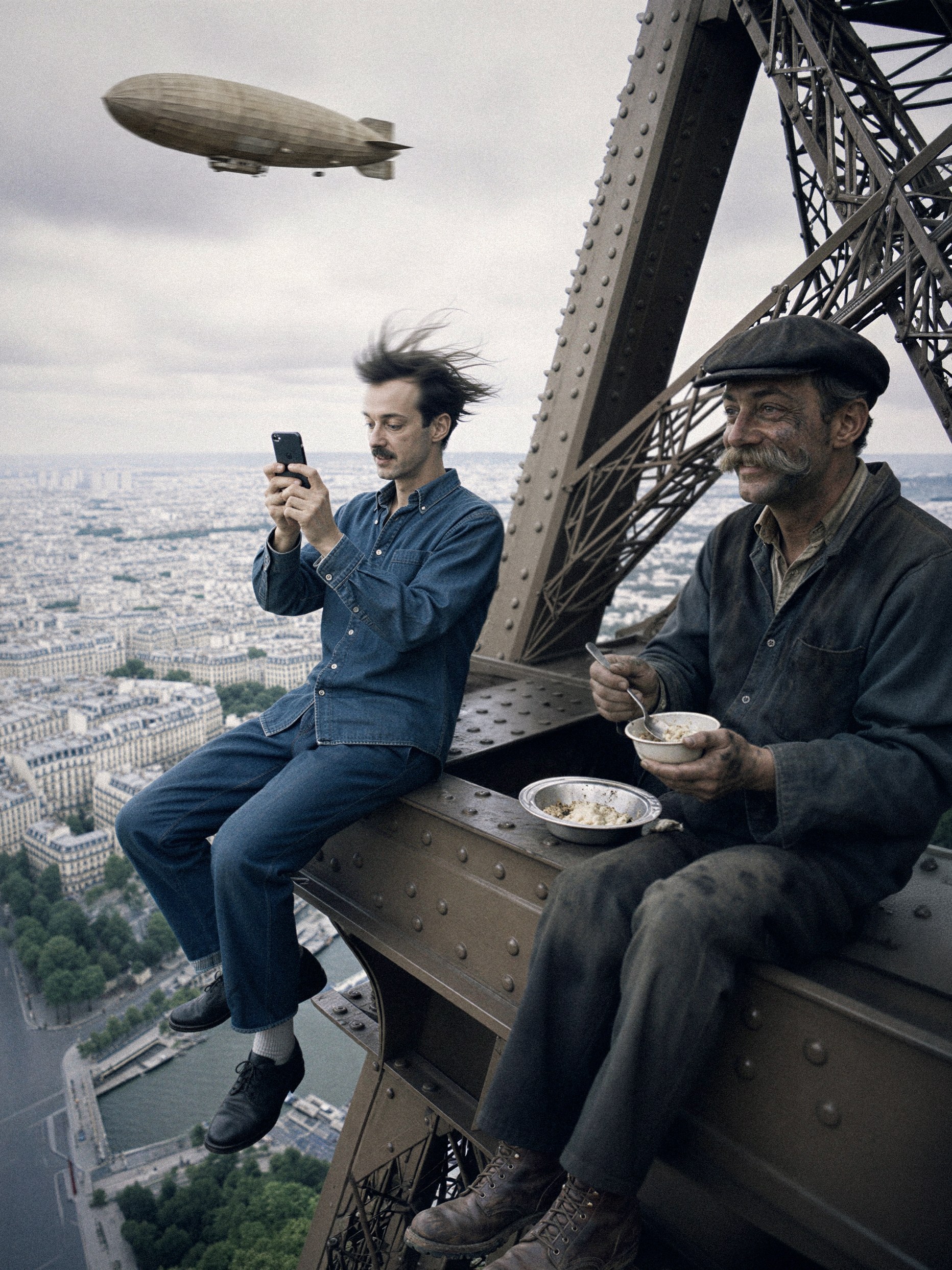
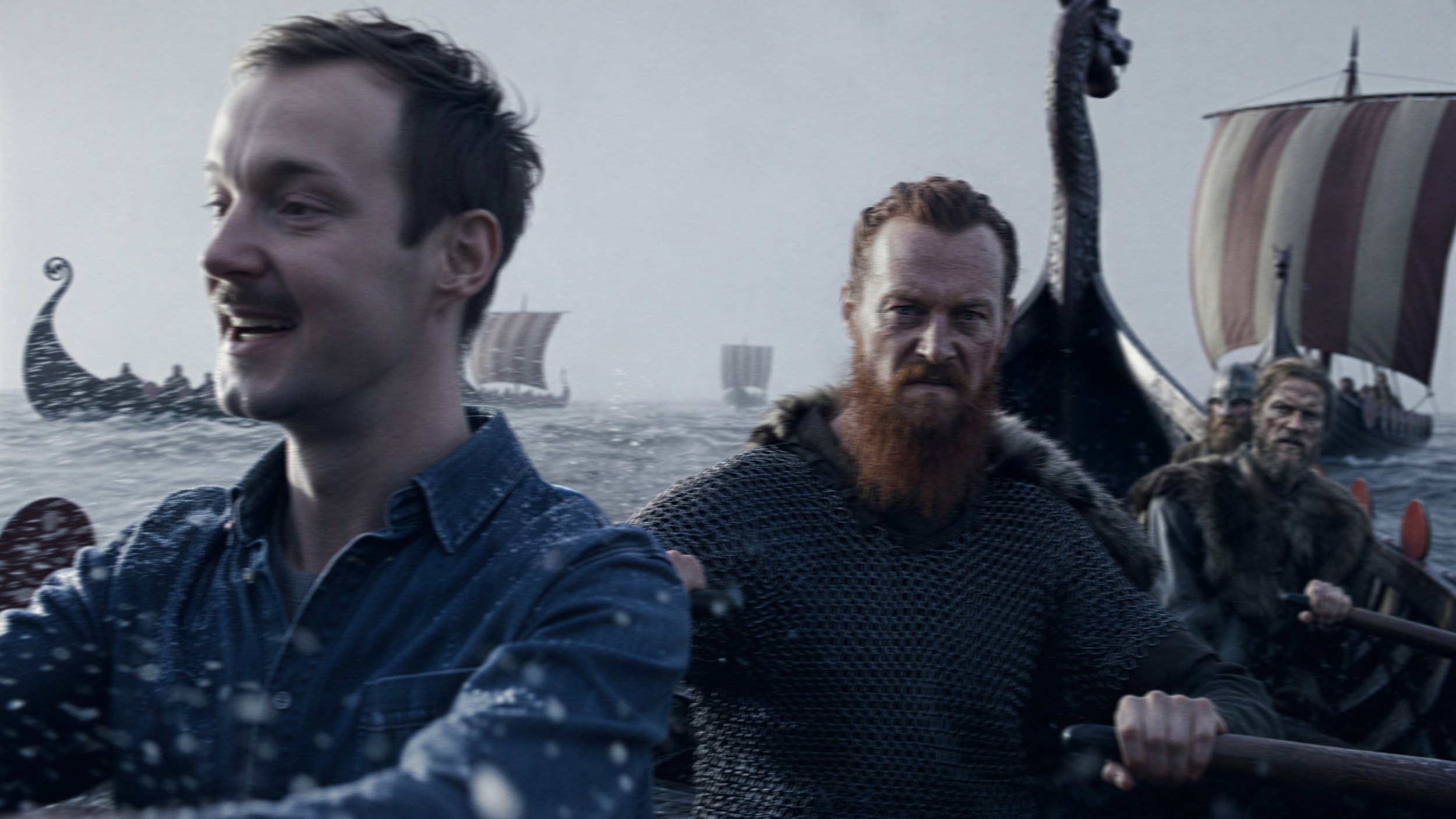
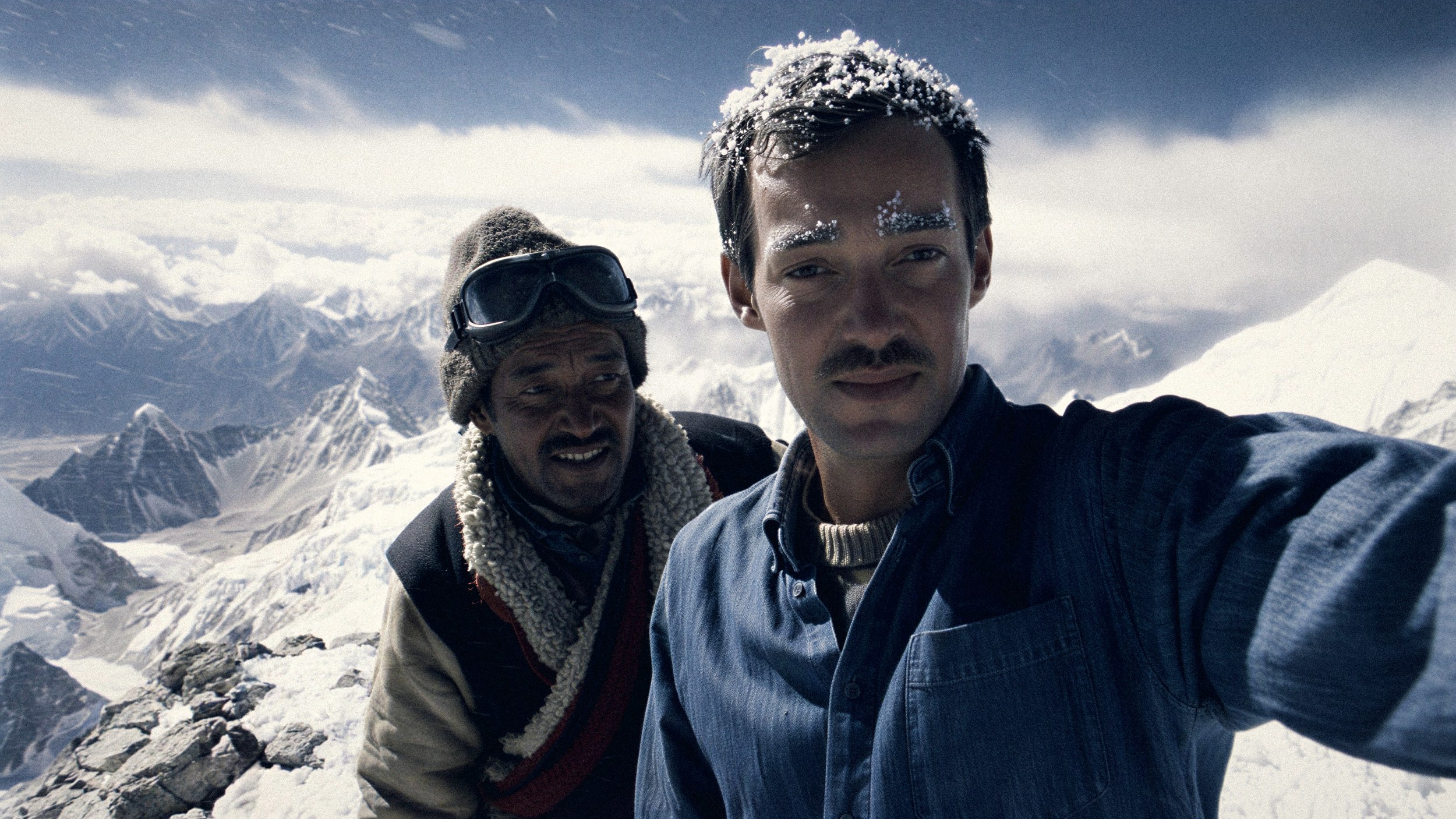
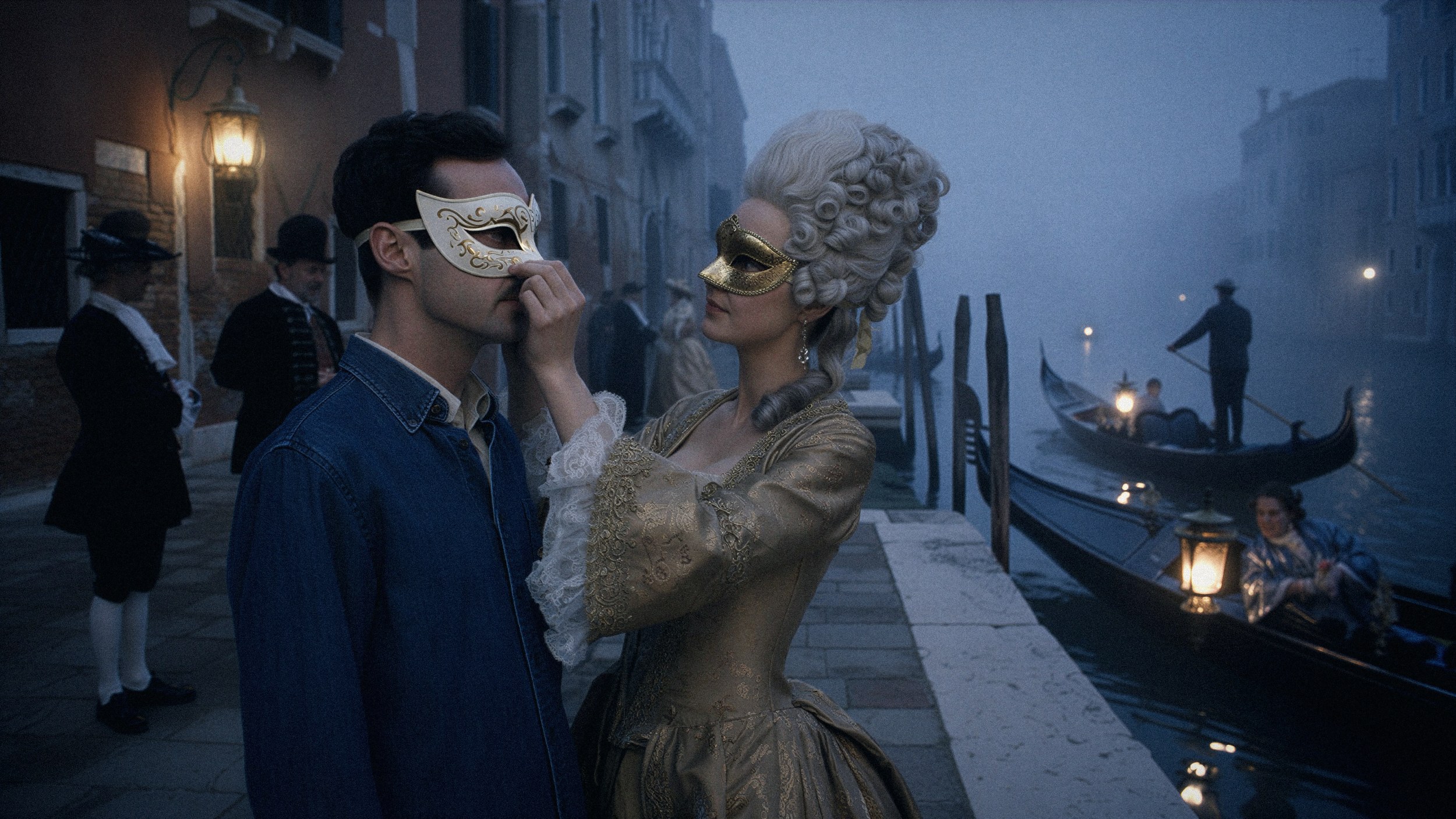
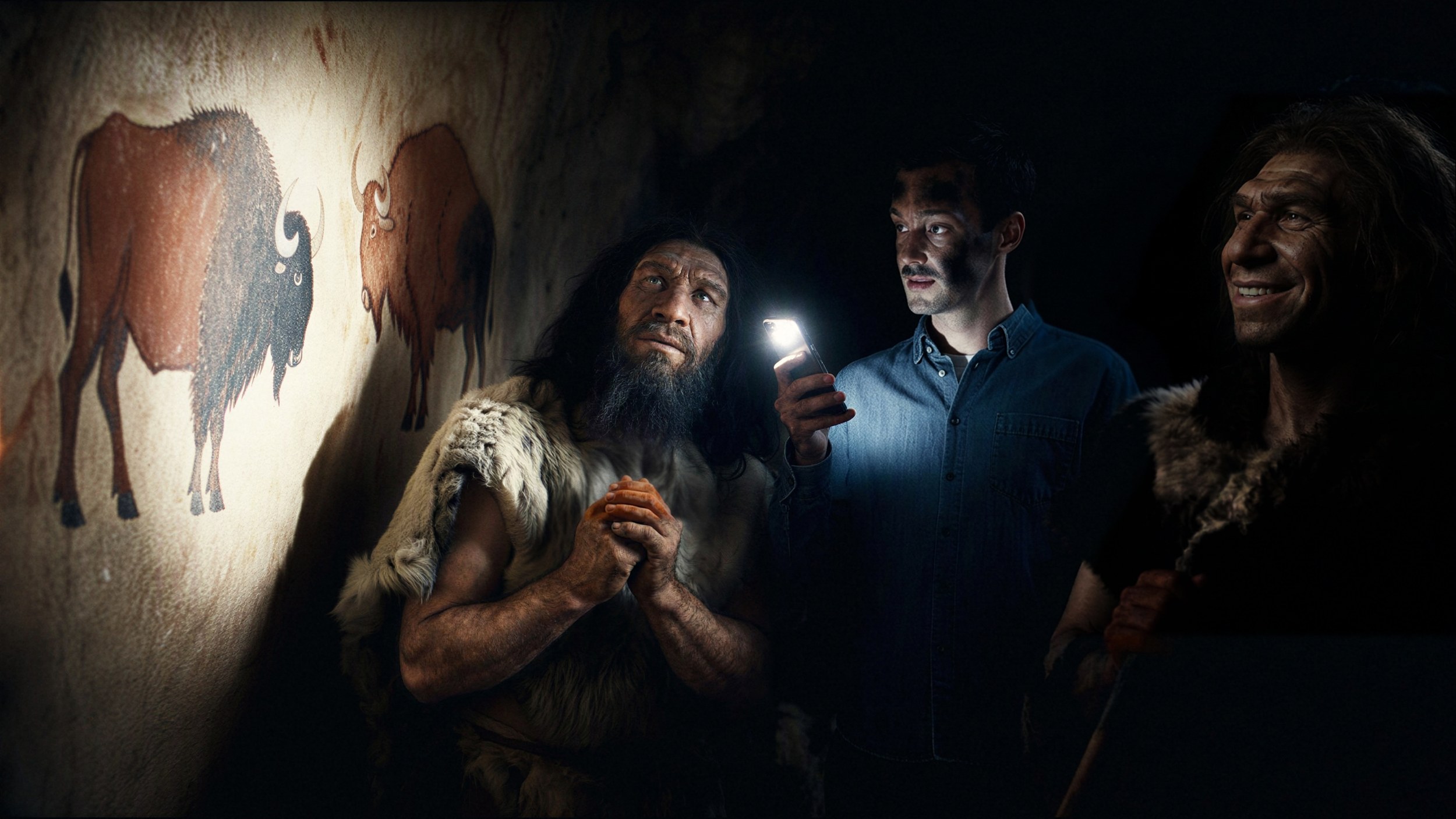
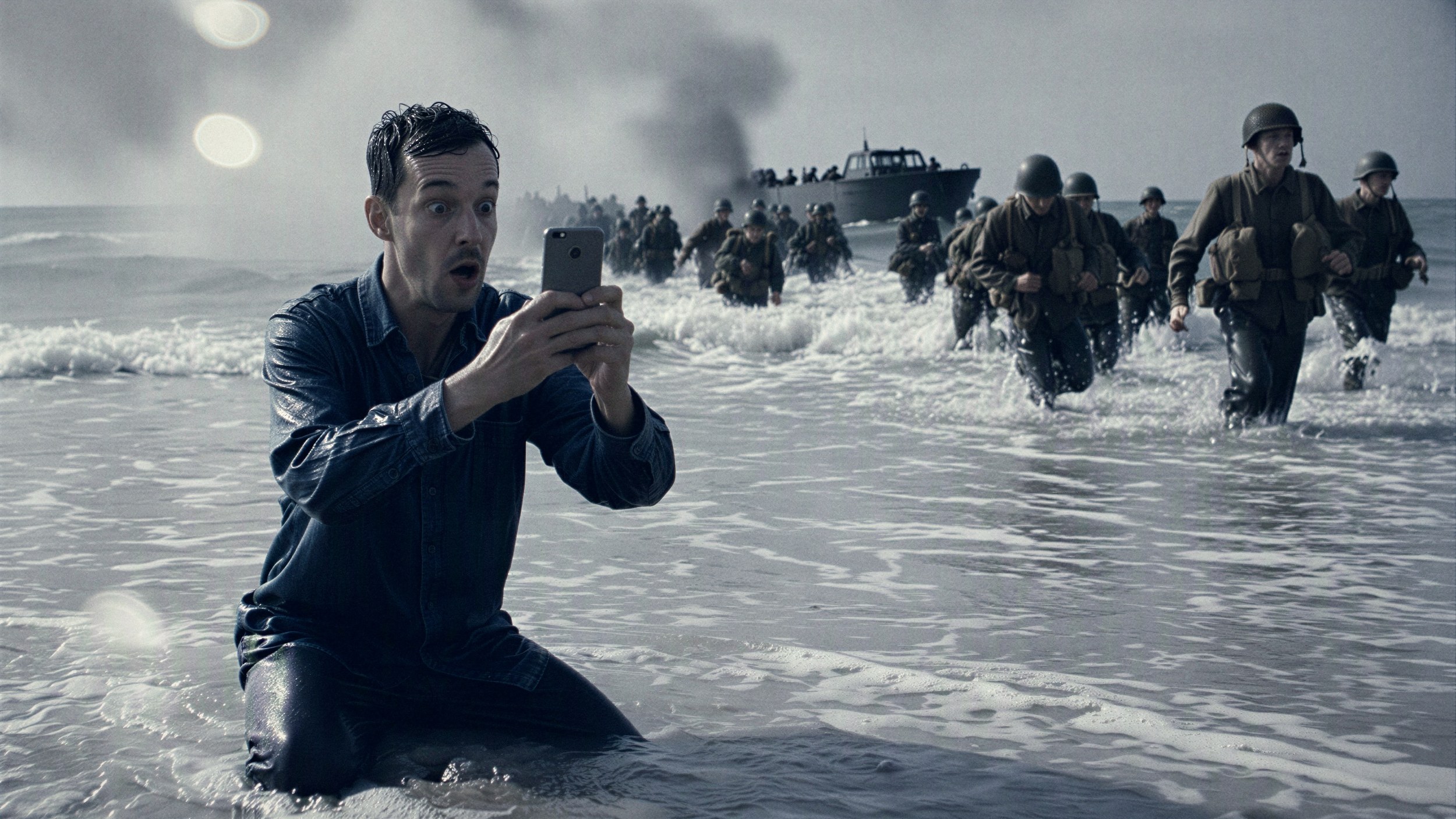
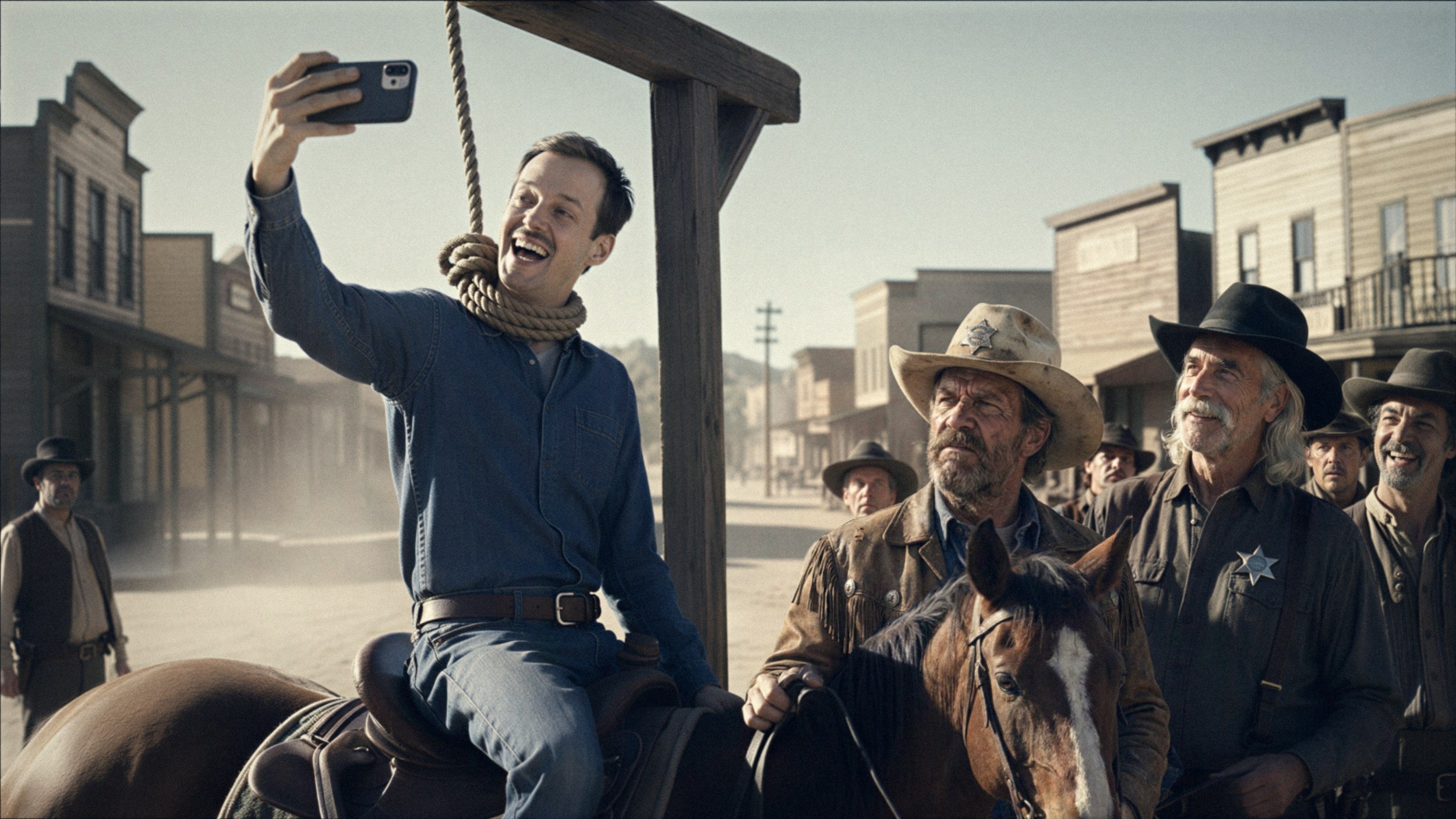
Everything was produced locally, in our own ComfyUI pipeline – from the LoRA training to the automatic face check and the final grade.
AI Imaging: Robert Brembeck · Model: Ken, Procast Hamburg